Neurodiversity Umbrella
Shading Every Mind, Celebrating Every Strength.
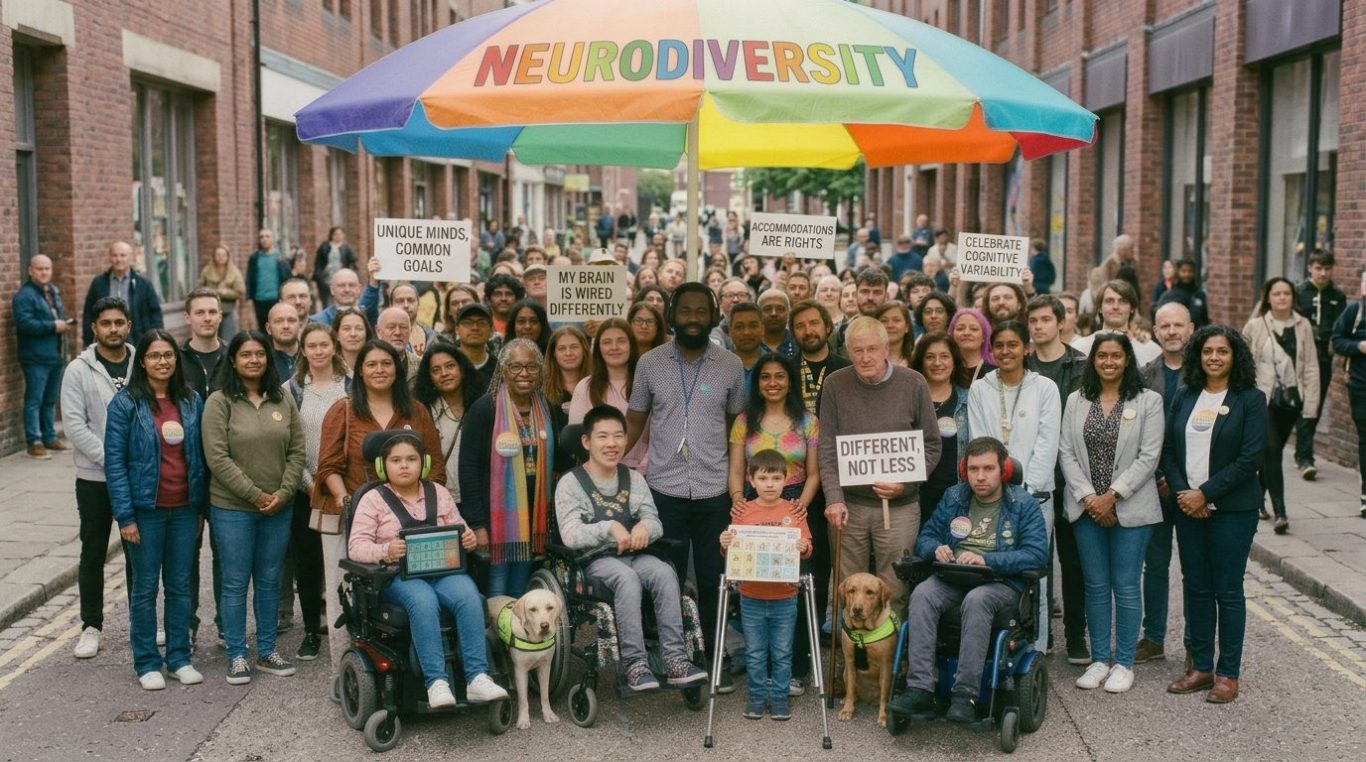
The neurodiversity umbrella is a conceptual framework that encompasses the natural variation in human brain function, processing styles, and cognitive profiles. Coined as a term in the late 1990s by sociologist Judy Singer, neurodiversity moves away from treating neurological differences purely as deficits, framing them instead as normal variations within the human population.
Under this umbrella sit both neurotypical profiles (those whose cognitive development aligns with standard societal expectations) and neurodivergent profiles—including Autism Spectrum Condition (ASC), ADHD, Dyslexia, Dyspraxia (DCD), Dyscalculia, Tourette Syndrome, and Synesthesia.
Key Dimensions of the Neurodiversity Umbrella
The Core Concept: Just as biodiversity is essential to a healthy ecosystem, neurodiversity is essential to human society. It asserts that there is no single "normal" or "correct" way for a human brain to process information, perceive the world, or interact with others.
The Medical vs. Social Model: The umbrella bridges clinical understanding with the social model of disability. While acknowledging real daily challenges, it emphasizes that many obstacles faced by neurodivergent individuals stem from environments designed exclusively for neurotypical minds, rather than intrinsic faults within the individual.
1. For Individual Human Beings
Self-Acceptance and Identity: Re-framing neurological differences reduces shame and self-blame. Understanding one's brain profile allows individuals to build self-compassion and develop strategies tailored to their natural ways of thinking.
Targeted Support and Accommodations: Recognizing specific profiles helps pinpoint effective accommodations—such as sensory-friendly environments, assistive technologies, or clear, direct communication styles—improving quality of life and mental well-being.
Strengths-Based Focus: It highlights inherent strengths alongside challenges, such as hyper-focus, pattern recognition, deep empathy, creative problem-solving, or spatial reasoning.
2. For Society and Culture
Inclusion and Human Rights: The framework advocates for equal access in education, healthcare, and public spaces, shifting society from forced assimilation toward authentic inclusion.
Reduction of Stigma: Educating the public about the neurodiversity umbrella dismantles stereotypes, fostering a culture where cognitive differences are met with understanding rather than judgment.
Enriched Community Dynamics: Integrating diverse perspectives deepens collective empathy and expands cultural narratives around how humans experience the world.
3. For Daily Life, Work, and Innovation
Cognitive Diversity in Problem-Solving: Organizations and teams with neurodiverse members benefit from out-of-the-box thinking. Varied processing styles approach complex problems from unique angles, driving innovation and preventing groupthink.
Universal Design: Designing spaces, tools, and systems for neurodivergent needs—such as clear signage, reduced visual clutter, flexible schedules, and quiet spaces—ultimately creates better, more accessible environments for everyone.
Neurodiversity
We can think to Neurodiversity like an umbrella under which every people follow both neurotypical and neurodivergent. In this perspective, the concept of neurodivergence is a powerful framework for understanding and celebrating the vast diversity of human minds.
Neurodivergence
Neurodivergence is a non-medical, umbrella term that describes people whose brains develop or work differently for some reason. This means they have different strengths and challenges from people whose brains develop or work more typically (referred to as "neurotypical").
The core idea of the neurodiversity paradigm is that these differences are natural variations in the human genome, not inherently "defects" to be cured. The focus is on acceptance, support, and accommodation rather than just treatment.
There is no single, universally agreed-upon "full list," as the concept is inclusive and evolving. However, here is a comprehensive list of conditions and traits widely considered to be neurodivergences, categorized for clarity.

Recognised Neurodivergences
Attention Deficit & Hyperactivity (ADHD), Dyslexia; Dyscalculia, Dysgraphia, Dyspraxia, Autism Spectrum Condition, Tourette's Syndrome.

Other Neurodivergences
Synaesthesia, Sensory Processing Disorder (SPD), Intellectual Disability, Global Developmental Delay (GDD), Non-Verbal Learning Disability (NVLD).

Acquired Neurodivergences
Traumatic Brain Injury (TBI), Long COVID Syndrome, Post-COVID Syndrome, Post-Traumatic Stress Disorder (PTSD) & Complex PTSD (C-PTSD).

Some Considerations about Neurodiversity
Co-occurrence (Comorbidity): It is extremely common for neurodivergences to co-occur. For example, someone with Autism is very likely to also have ADHD, anxiety, and/or sensory processing differences.
Spectrum of Experience: Every neurodivergence is a spectrum. No two autistic people, for instance, will have the exact same profile of strengths and challenges.
Identity-First vs. Person-First Language: Many in the community prefer identity-first language (e.g., "I am autistic") over person-first language (e.g., "person with autism"). However, preferences vary, and it's always best to follow the individual's lead.
Not an Exhaustive List: As our understanding of the brain grows, this list may expand to include other conditions and cognitive styles.
Embrace Unique Minds
Explore Neurodiversity resources to understand, embrace, and support diverse neurological perspectives.